A footer and a sign-off are the professional way to close a document. In Invoice Office they are two different things, in two different places:
- The footer — the strip at the bottom carrying your company details — is a page element on the document template.
- The sign-off — “Kind regards, …”, payment instructions, a scanned signature — is a block on the same template, or the terms on the design.
Set the footer
- Go to Settings → Document designs, pick the language and open the design.
- Switch to Document template.
- In the left column, under PAGE, switch Company details on.
- Click Save.
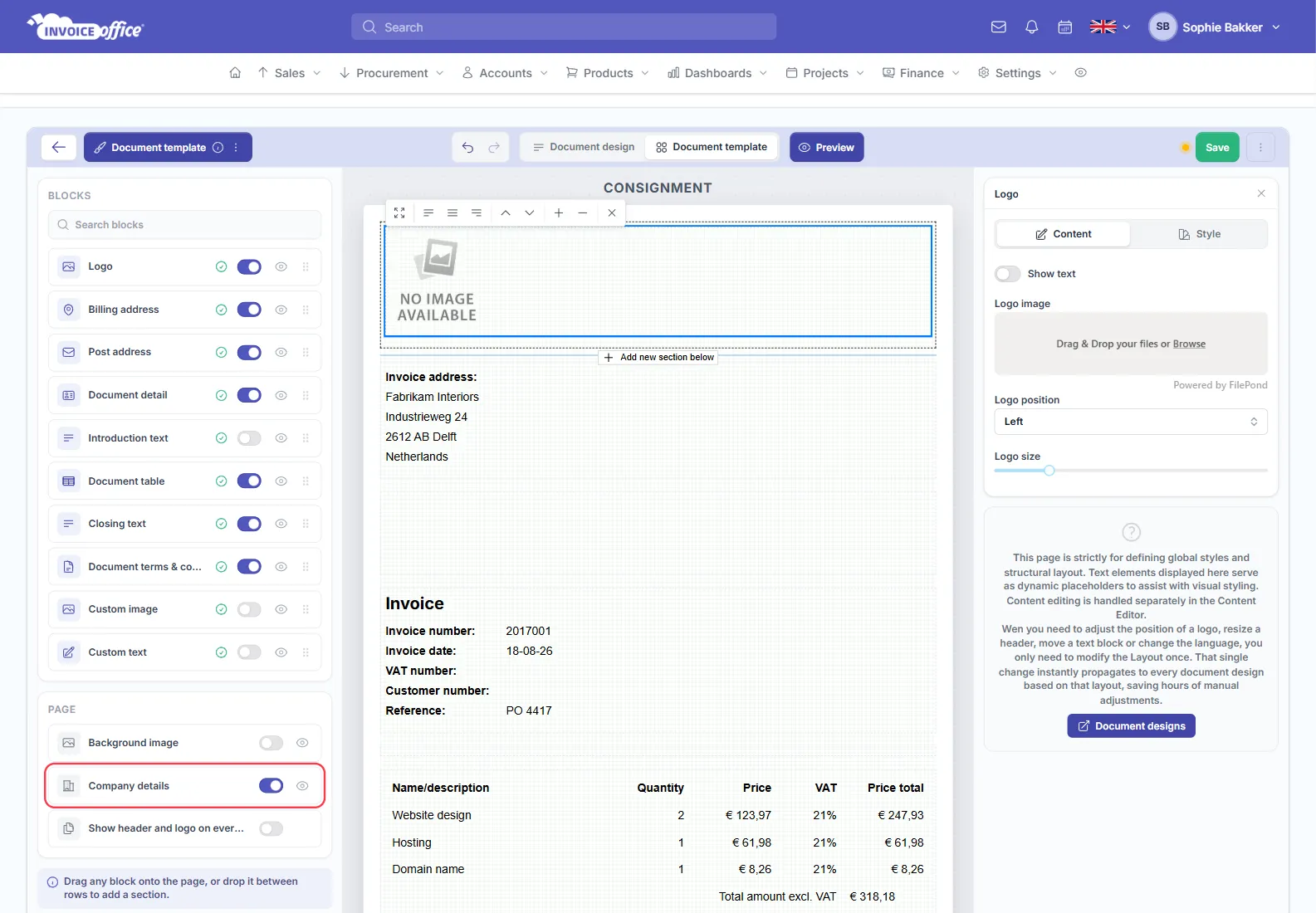
The footer is filled from your company record, so it stays right when your address or bank account changes — edit it under Settings → Company information rather than retyping it per design. Its eye icon isolates it in the preview so you can see exactly what prints.
Close the document with a sign-off
Three blocks sit at the end of the document, and each has a different job:
- Closing text — the sentence after the totals. This is where “Kind regards” and your name go.
- Document terms & conditions — your payment terms and legal text.
- Custom text or Custom image — anything else of your own, including a scanned signature image.
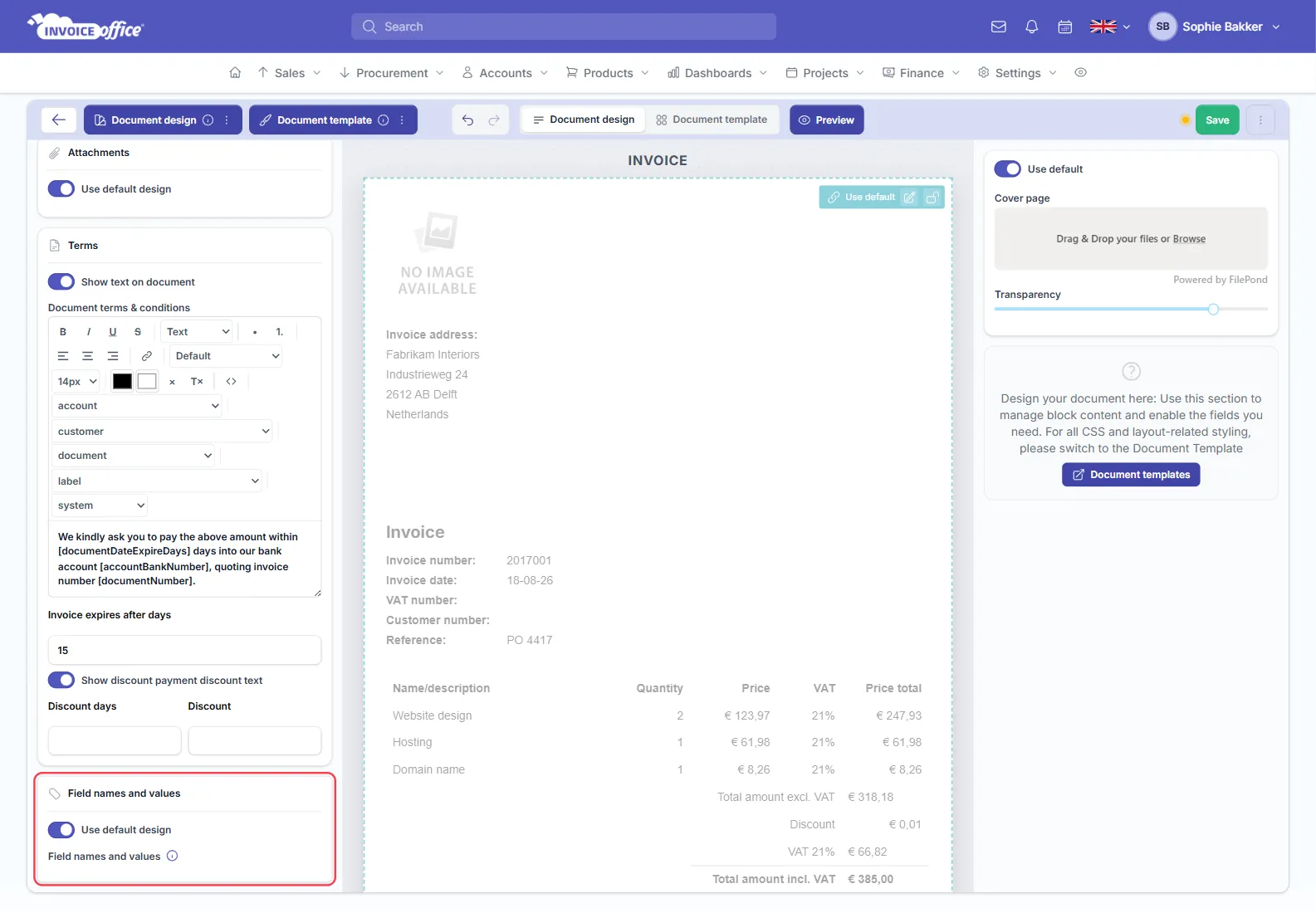
The wording of the terms is edited in Document design mode, under Terms. That editor has dropdowns that insert live values — account, customer, document, label and system — so a sentence like “pay within [documentDateExpireDays] days into [accountBankNumber], quoting [documentNumber]” fills itself in on every invoice.
What to put in a footer
A footer usually carries the things a customer or an auditor needs to find quickly: company name and address, VAT number, chamber of commerce registration, bank details, and your phone number or email.
Because the footer repeats on every page, keep it to a couple of lines — a long footer eats the room your product lines need. Show header and logo on every page, in the same PAGE section, does the equivalent for the top of the document.
Per language, per template
The terms belong to the design, and designs are held per language — so set them in each language’s design. The footer belongs to the template, so switching it on there covers every design built on it. See Create and manage your document design templates.